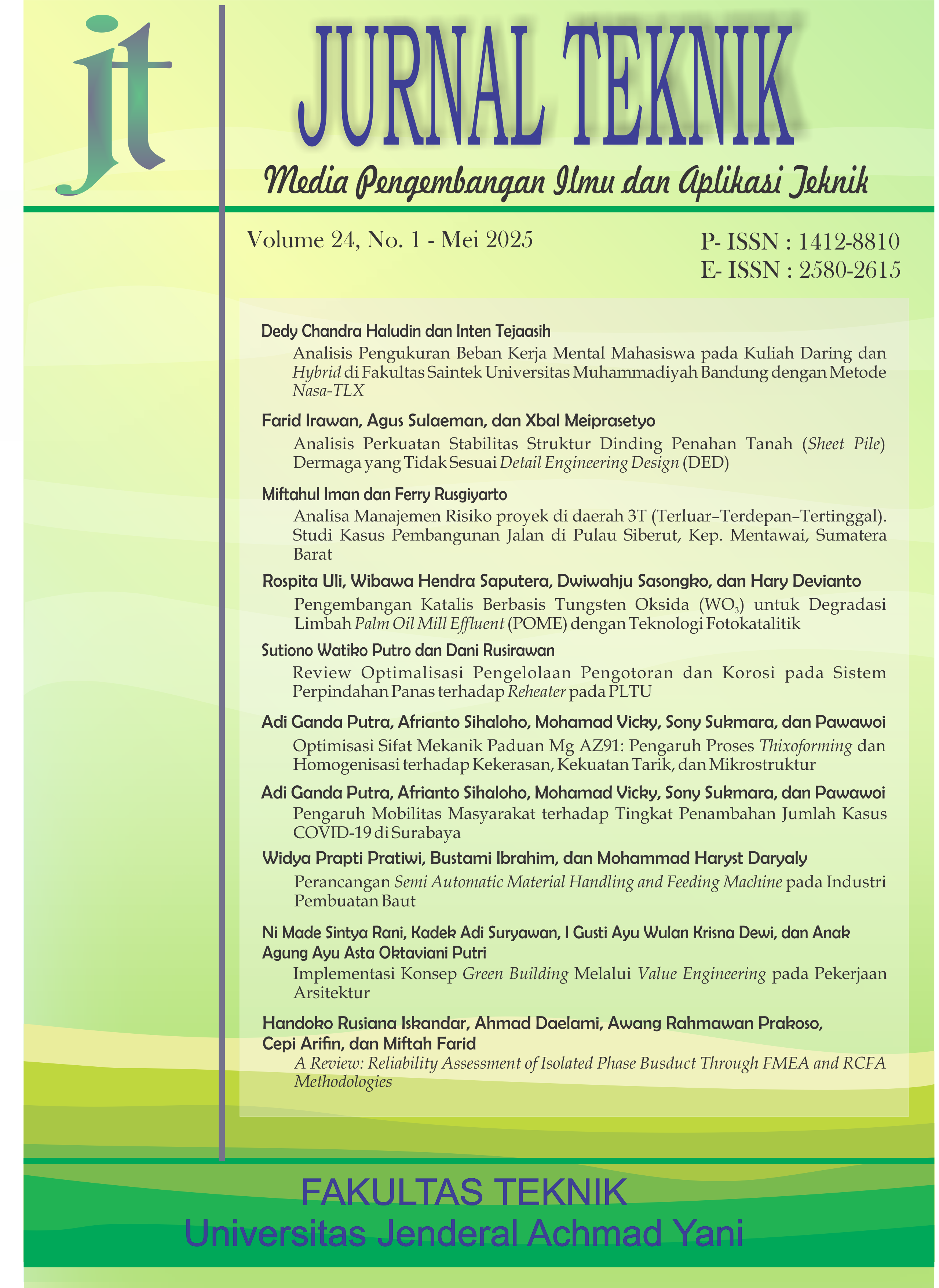
Analisa Manajemen Risiko proyek di daerah 3T (Terluar–Terdepan–Tertinggal). Studi Kasus Pembangunan Jalan di Pulau Siberut, Kep. Mentawai, Sumatera Barat
DOI:
https://doi.org/10.55893/jt.vol24no1.722Keywords:
3T, risk, dominantAbstract
Project implementation in 3T (frontier, outermost, and disadvantaged) areas presents unique challenges due to difficult geographic conditions, which hinder the mobilization of equipment, materials, and labor. This research aims to identify the most dominant risks encountered during project execution in these regions. The study involved distributing questionnaires to 56 respondents, categorized by experience with 3T projects, agency affiliation (road construction and maintenance, contractor, consultant), educational background, and primary work location (Java or outside Java). The research began with validity and reliability testing of the questionnaire. It then proceeded to assess the probability, impact, and overall risk level using the Severity Index method. In addition, the analysis explored trends in responses based on the respondent classifications. The findings indicated that participants with experience in 3T projects, those working in contractor agencies, holding a bachelor's degree, and primarily working outside Java, generally perceived higher risks in 3T project implementation compared to other groups. The study concluded that project work in 3T regions is associated with risk levels ranging from moderate to very high, highlighting the importance of careful planning and risk management when operating in these challenging environments.
References
Cooper, D., dkk., (2005). Project Risk Managements Guidelines. Managing Risk in Large Projects and Complex Procurements. pp. 1–4.
Kementerian Pekerjaan Umum dan Perumahan Rakyat, Badan Pengembangan Sumber Daya Manusia, Pusat Pendidikan dan Pelatihan Sumber Daya Air dan Kontruksi, (2017). Pelatihan Manajemen Risiko Investasi Infrastruktur.
Kementerian Pekerjaan Umum dan Perumahan Rakyat,. (2016). Manajemen Risiko pada kegiatan Pembangunan Terowongan Jalan.
Moi, F., Purnawirati, N., (2021). Analisa Manajemen Risiko Proyek Pembangunan Jalan Ruas Jala Baru Waebetu – Tarawaja, NTT. Politeknik Negeri Bali. Jurnal Talenta Sipil, Vol 4 no 1.
Muallif., (2024). Daerah 3T. Pengertian, Permasalahan dan daftar wilayahnya di Indonesia. website Universitas Islam An Nur – Lampung.
PPK 1.6, Provinsi Sumatera Barat, (2022). Kontrak Tipis Siberut. Paket Peningkatan Jalan dan Jembatan Bailley, Labuhan Bajau – Sigapokna, Pulau Siberut.
Rachmawati, N., Tenrisukki, A,. (2020). Analisa Manajemen Risiko Pembangunan Jalan Tol (Studi Kasus Jalan Tol Becakayu). Universitas Gunadharma. Jurnal Rekayasa Sipil, Vol 14 no 1.
Setyaning, LB., dkk., (2023). Analisa Manjemen Risiko Proyek pada Proyek Pembangunan Jalan Tol Yogyakarta-Bawen. Jurnal Aplikasi Teknik Sipil, Vol.21, No. 4, 2023.
SNI ISO 31000, (2011). Manajemen Risiko, Prinsip dan Pedoman.
Sugiyono., (2005). Statistika untuk Penelitian. CV Alfabeta, Anggota Ikatan Penerbit Indonesia.
Additional Files
Published
Issue
Section
License
Copyright (c) 2025 Miftahul Iman, Ferry Rusgiyarto

This work is licensed under a Creative Commons Attribution 4.0 International License.
Authors retain copyright and grant Jurnal Teknik: Media Pengembangan Ilmu dan Aplikasi Teknik the right of first publication. Articles are published open access under the Creative Commons Attribution 4.0 International License (CC BY 4.0), which permits use, sharing, adaptation, distribution, and reproduction in any medium or format, for any purpose, provided that appropriate credit is given to the original authors and source, a link to the license is provided, and any changes are indicated.