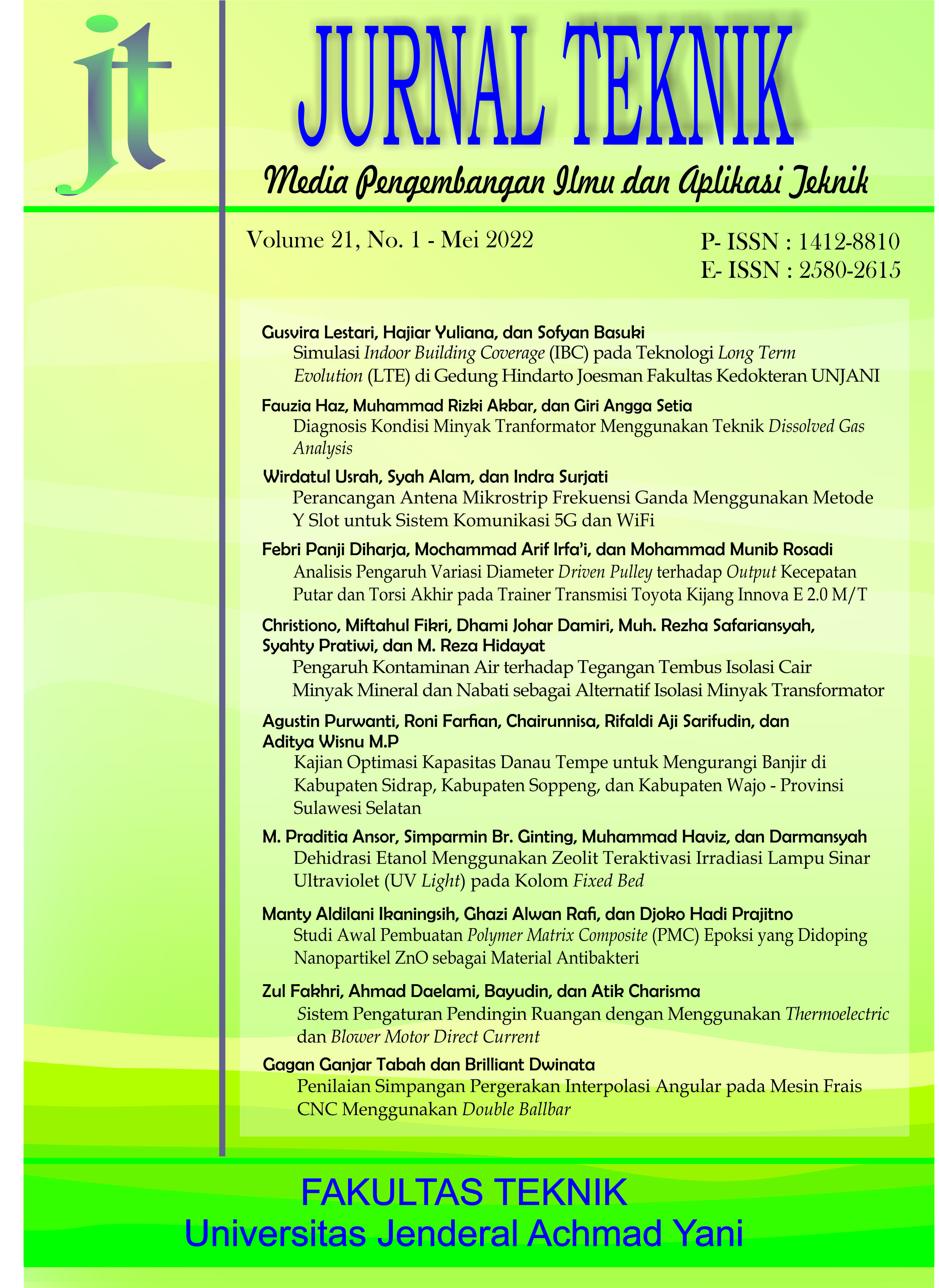
Kajian Optimasi Kapasitas Danau Tempe untuk Mengurangi Banjir di Kabupaten Sidrap, Kabupaten Soppeng, dan Kabupaten Wajo - Provinsi Sulawesi Selatan
DOI:
https://doi.org/10.55893/jt.vol21no1.431Keywords:
curve number, tempe lake, moveable weir, imundation areaAbstract
Tempe Lake is a floodplain lake in South Sulawesi Province. The capacity of Tempe Lake is affected by the inflow into the lake. The high intensity of rain causes the lake water to overflow and flood the area around the lake. To reduce the flood inundation, an optimization study was carried out on the capacity of Tempe Lake. Optimization is carried out by adjusting the optimal height of the gate opening on the Tempe Moveable Weir using a hydrological model. The curve number (CN) of rivers flowing into the lake is used, which is a function of 2 land cover scenarios, namely the existing condition and the RTRW plan for South Sulawesi Province. Based on hydrological modeling, it was found that the inflow of Tempe Lake (Q25) for the existing condition scenario was 11,825.83 m3/s, and for the RTRW plan of South Sulawesi Province, scenario was 11,606.62 m3/s. The 2D hydrodynamic modeling simulates various heights of gate openings on the Tempe Moveable Weir with respect to the flood inundation area. The optimal capacity of Tempe Lake to reduce flooding is achieved by maintaining the water level at +7.53 m above sea level with a gate opening height of 4 m.
References
Anonim, 2008, “HEC-RAS River Analysis System : User’s Manual, US Army Corps of Engineers, Hydrologic Engineering Centre. ASCE”, Hydrology Handbook, ASCE, USA. 1986
Balai Besar Wilayah Sungai (BBWS) Pompengan – Jeneberang., 2018, Dokumen Detail Desain Revitalisasi Danau Tempe.
Brunner, G.W. (2016) HEC-RAS River Analysis System. 2D Modeling User’s Manual. US Army Corps of Engineers, USA.
Daru, T., Andawayanti, U., & Limantara, L. M. (2016). Analisis Perubahan bilangan kurva aliran permukaan (runoff curve number) terhadap debit banjir pada DAS Brantas Hulu. Jurnal Teknik Pengairan: Journal of Water Resources Engineering, 7(1), 150-159.
Hadisusanto, S., 2015. Kontribusi Biologi dalam Pengelolaan dan Pengembangan Danau di Indonesia. In Pidato Pengukuhan Jabatan Guru Besar.Yogyakarta: Universitas Gajahmada.
Hajibayov, F., Ozkul, B. D. dan Terzi, F. (2017)‘Floodplain Modeling and Mapping Using The Geographical Information Systems (GIS) and HecRAS/HEc-GeoRAS Applications. Case of Edirne, Turkey.’, in GISRUK 2017. Manchester, UK.
Indarto. (2012). Hidrologi – Dasar Teori dan Contoh Aplikasi Model Hidrologi. Jakarta : Bumi Aksara.
Istiarto. 2014. Modul Pelatihan Simulasi Aliran 1-Dimensi Dengan Bantuan Paket Program Hidrodinamika HEC-RAS. Universitas Gadjah Mada
Panjaitan, A., Sudarsono, B., & Bashit, N. (2019). Analisis Kesesuaian Penggunaan Lahan Terhadap Rencana Tata Ruang Wilayah (RTRW) Di Kabupaten Cianjur Menggunakan Sistem Informasi Geografis. Jurnal Geodesi Undip, 8(1), 248-257.
Peraturan Menteri Negara Lingkungan Hidup. 2009. Peraturan Menteri Lingkungan Hidup Nomor 28 tahun 2009 tentang Daya Tampung Beban Pencemaran Air Danau Dan/Atau Waduk.
Quiroga, V. M., Kure, S., Udo, K. dan Mano, A. (2016) ‘Application of 2D numerical simulation for the analysis of the February 2014 Bolivian Amazonia flood: Application of the new HEC-RAS version 5’, RIBAGUA – Revista Iberoamericana del Agu. IAHR y WCCE, 3(1), pp. 25–33. doi: 10.1016/j.riba.2015.12.001.
Rahman, M. M. dan Ali, M. M. (2016) ‘Flood Inundation Mapping of Floodplain of the Jamuna River Using HECRAS and HEC-GeoRAS’, Journal of PU, 3(2), pp. 24–32.
Rante, N. R., Sumarauw, J. S., & Wuisan, E. M. (2016). Analisis Debit Banjir Anak Sungai Tikala Pada Titik Tinjauan Kelurahan Banjer Link. V Kecamatan Tikala Dengan Menggunakan HEC-HMS Dan HEC-RAS. TEKNO, 14(65).
SNI 2415:2016. (2016). Tata cara perhitungan debit banjir rencana. Jakarta: Badan Standarisasi Nasional.
Soewarno. 1995. Hidrologi Aplikasi Metode Statistik Untuk Analisa Data. Bandung: Nova
Triatmodjo, B. (2010). Hidrologi terapan. Beta Offset.
Additional Files
Published
Issue
Section
License
Copyright (c) 2022 Agustin Purwanti, Roni Farfian, Chairunnisa, Rifaldi Aji Sarifudin, Aditya Wisnu M.P

This work is licensed under a Creative Commons Attribution 4.0 International License.
Authors retain copyright and grant Jurnal Teknik: Media Pengembangan Ilmu dan Aplikasi Teknik the right of first publication. Articles are published open access under the Creative Commons Attribution 4.0 International License (CC BY 4.0), which permits use, sharing, adaptation, distribution, and reproduction in any medium or format, for any purpose, provided that appropriate credit is given to the original authors and source, a link to the license is provided, and any changes are indicated.