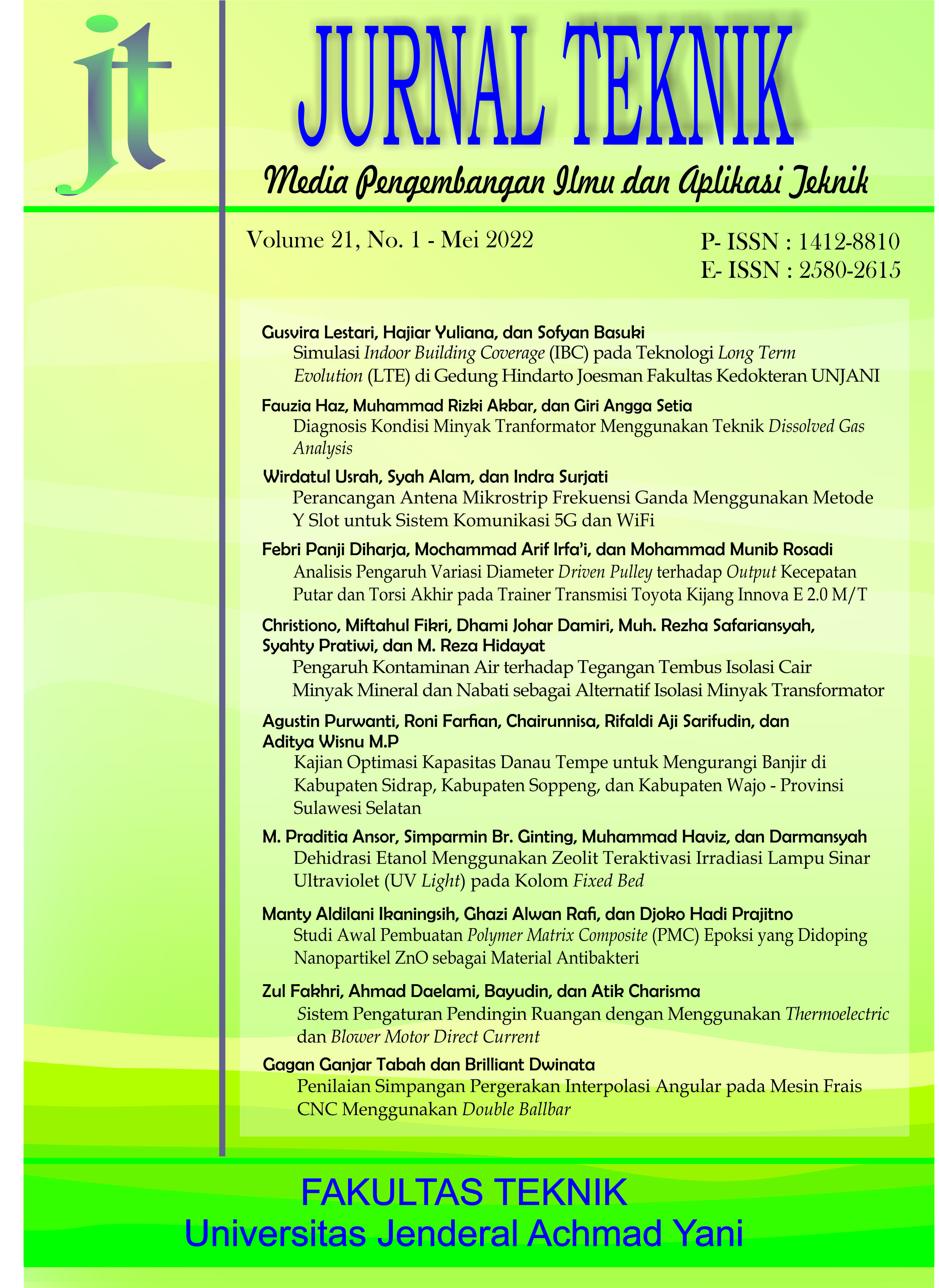
Analisis Pengaruh Variasi Diameter Driven Pulley Terhadap Output Kecepatan Putar dan Torsi Akhir pada Trainer Transmisi Toyota Kijang Innova E 2.0 M/T
DOI:
https://doi.org/10.55893/jt.vol21no1.193Keywords:
Final Torque, Output Rotational Speed, Driven Pulley SizeAbstract
Pulley is a receiver or converter of rotary power and moment of force associated with each other using a v-belt, while the transmission is a mechanism to convert power from input power to produce variable output power. Torque and RPM are affected by gear ratio or pulley size. The size of pulley on the input shaft also greatly influences torque and RPM. Where necessary to do a trial-driven pulley size. Therefore, this research was conducted to determine the effect of driven pulley size on the output rotational speed and final torque of driven pulley size used. This research uses 3 kinds of driven pulley sizes. Driven pulley 1 (150 mm), the highest torque is 1013.23 Nm and the highest output rotational speed is 1339.5 rpm. In driven pulley 2 (200 mm), the highest torque is 1350.97 Nm and the highest output rotational speed is 1004.62 rpm. While driven pulley 3 (250 mm), the highest torque is 1688.74 Nm, and the highest output rotational speed is 803.7 rpm. In the ANOVA test results, there were no significant differences between the three of pulley diameter variation, indicated by the Sig. 0.395 for output rotational speed and Sig. 0.491 for final torque.
References
Aminullah, M., & Ansori, A. (2017). Rancang Bangun Trainer Transmisi Otomatis Tipe Planetary Gear. JRM: Jurnal Rekayasa Mesin, 04(02), 163-168.
Editorial. (2019, November 20). Sistem Transmisi. Retrieved from Wikipedia: https://id.wikipedia.org/wiki/Sistem_transmisi
Febrian, R. (2019, March 15). Toyota New Kijang Innova E 2.0 M/T: Benar-Benar untuk Keluarga. Retrieved from Berita Seputar Otomotif: https://rajufebrian.wordpress.com/2009/03/15/toyota-new-kijang-innova-e-20-mt-benar-benar-untuk-keluarga/
Handoyo, E., Pramono, C., Salahudin, X., & Hastuti, S. (2019, Maret). Mesin Pengiris Pisang dengan Variasi Diameter Pulley Terhadap Putaran dan Tebal Irisan. Jurnal Teknik Mesin, 03(01), 29-35.
Irawan, A. P. (2016). Perencanaan Sistem Transmisi Roda Gigi. Yogyakarta: Kanisius.
Martono, N. (2016). Metode Penelitian Kuantitatif: Analisis Isi dan Analisis Data Sekunder (Edisi Revisi 2). Jakarta: Rajawali Pers.
Munandar, W. A., Indra, A., & Yendra, A. (2019, Oktober 10). Analisa Variasi Diameter Pully Terhadap Waktu Pemasakan Lempuk Durian Studi Kasus Pada Usaha Lempuk Durian “Citra Rasa”. Peningkatan Kemandirian Teknologi dan Bisnis Untuk Pembangunan Wilayah Pesisir(2019: SNIT 2019), pp. 80-87.
Narbuko, C., & Achmadi, A. (2013). Metodologi Penelitian. Jakarta: Bumi Aksara.
Pambudi, T. A., Pramono, G. E., & Yuliaji, D. (2019, Januari). Analisa Sistem Roda Gigi Diferensial Penggerak Roda Belakang Kendaraan Mobil Listrik (IKSA). ALMIKANIKA, 01(01), 27-34.
Rosadi, M. M., Pramitasari, R. E., & Ramadani, A. H. (2019). Rancangan Sistem Penggerak Trainer Transmisi Manual 5 Percepatan Toyota Kijang. Teknik Mesin, 3-4.
Sugiyono. (2015). Metode Penelitian Kuantitatif, Kualitatif, dan R&D. Bandung: Alfabeta.
Sularso, & Suga, K. 2013. Dasar Perencanaan dan Pemilihan Elemen Mesin. Jakarta: PT. Pradnya Paramita.
Susanto, N., Purwaningsih, R., & Baharullah, I. A. (2017, September). Analisis Pengaruh Transmisi Mobil Manual dan Otomatis Terhadap Tingkat Kesulitan yang Dihadapi Pengemudi Pemula. J@ti Undip: Jurnal Teknik Industri, 12(03), 197-205.
Wakid, M. (2011). Sistem Transmisi Kendaraan Ringan. Yogyakarta: Skripta Media Creative.
Additional Files
Published
Issue
Section
License
Copyright (c) 2022 Febri Panji Diharja, Mochammad Arif Irfa’i, Mohammad Munib Rosadi

This work is licensed under a Creative Commons Attribution 4.0 International License.
Authors retain copyright and grant Jurnal Teknik: Media Pengembangan Ilmu dan Aplikasi Teknik the right of first publication. Articles are published open access under the Creative Commons Attribution 4.0 International License (CC BY 4.0), which permits use, sharing, adaptation, distribution, and reproduction in any medium or format, for any purpose, provided that appropriate credit is given to the original authors and source, a link to the license is provided, and any changes are indicated.